Goa Gajah – Exploring the 11th-Century Mysteries of Bali’s Elephant Cave Historic Site
History & Core Attractions
Goa Gajah (The Elephant Cave) is an important archaeological sanctuary dating back to the 11th century. The site stands as historical proof of the peaceful co-existence between early Hinduism and Buddhism in ancient Bali. The entire stone courtyard lay buried under volcanic earth and silt for centuries before being excavated by Dutch archaeologists in 1923.
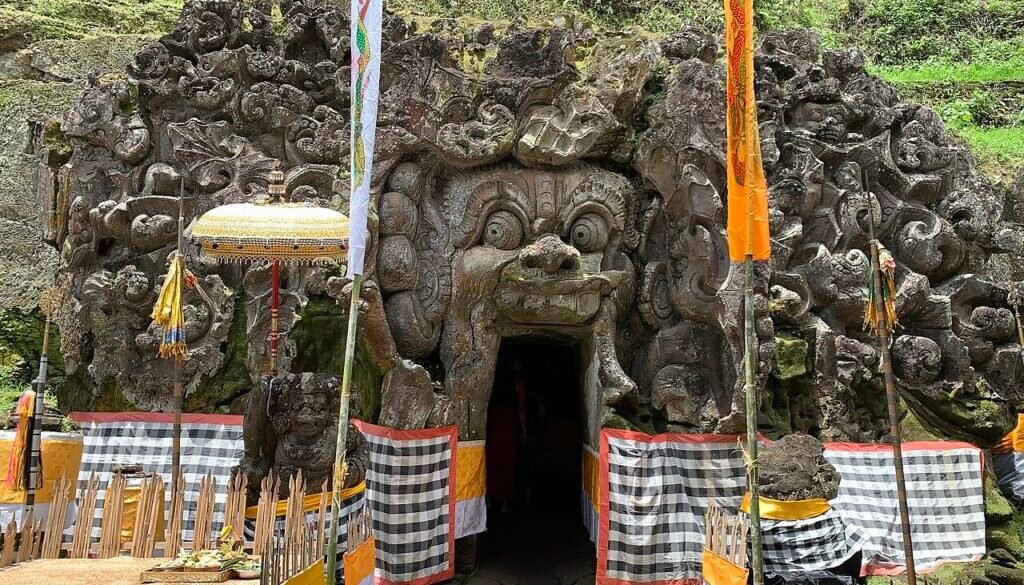
The mystical centerpiece of this site is the cave mouth, which is carved out of a solid rock face to show a menacing, wide-eyed face thought to be Bhoma, an ancient earth monster meant to keep away evil spirits. Inside the T-shaped cave, narrow stone niches cut into the walls show where ancient priests and monks would sit in absolute darkness to meditate. The outer courtyard houses a large ancient bathing pool flanked by six stone statues of mountain nymphs holding water pitchers.
Activities & Tourist Amenities
- Explore the Inner Cave Chamber: Experience the heavy, silent atmosphere inside the meditation niches, lit faintly by small oil lamps.
- Trek to the Buddhist Valley Ruins: Take the stone staircase down into the lower jungle valley to find crumbled stone stupas and giant tree roots wrapped around raw rock walls.
- Ancient Architecture Photography: Document the centuries-old rock carvings and the courtyard pools.
- Amenities: Tourist information office, restrooms, a large market strip selling traditional Balinese sarongs and souvenirs, and licensed local history guides for hire.
Location & Route Directions
Located in Bedulu Village, Blahbatuh District, Gianyar Regency. This historic site sits right on the edge of Ubud, requiring just a 10-to-15-minute drive east from Ubud center.
Operational Tips & Best Time to Visit
- Opening Hours: 8:00 AM to 6:00 PM WITA.
- Best Time: 8:30 AM WITA when the air is cool and the large tour buses have not yet arrived.
- Cultural Rules: Women during their menstrual cycle are respectfully requested not to enter the inner cave temple chamber to uphold local spiritual traditions. Visitors must wear a waist sash and a sarong covering their legs, which are available at the entrance.