Tegallalang Rice Terrace – Ubud’s Worldwide UNESCO Cultural Landscape and Subak System
History & Core Attractions
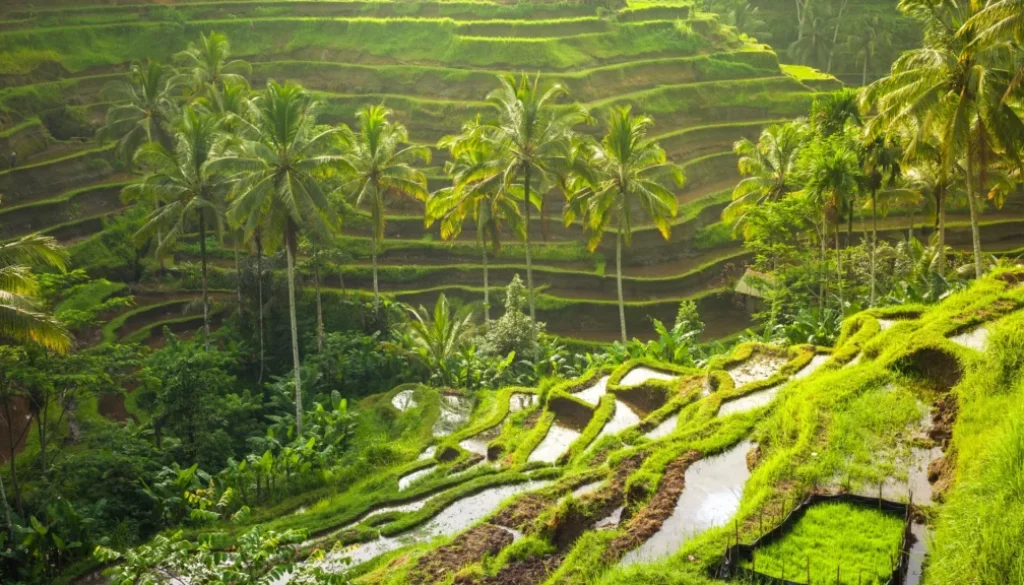
Tegallalang Rice Terrace is a living showcase of Subak, Bali’s ancient, communal cooperative irrigation system that is deeply rooted in the Hindu philosophy of Tri Hita Karana—the harmony between humans, nature, and the creator. This gorgeous terraced valley has been recognized globally as a UNESCO World Heritage site.
The main draw here is the extreme, steep topography of the valley walls, which have been painstakingly carved over centuries into beautiful undulating steps. Framed by tall coconut palms growing wild along the ridges and fed by a rushing river stream at the valley floor, Tegallalang offers an authentic, calming look at rural Balinese tropical farming life.
Activities & Tourist Amenities
- Rice Paddy Trekking: Visitors are allowed to cross the valley floor and hike up the terraced slopes to meet local farmers working the fields.
- Jungle Swings: Dozens of local operators along the ridge offer swings that push you out high over the steep drop-offs of the rice terraces.
- Cliff-Edge Cafe Hopping: A long line of chic cafes sits along the main Tegallalang road, offering locally grown Bali Arabica coffee with views looking straight across the valley.
- Amenities: Concrete walking paths, local guides, restrooms inside the cafes, and a long strip of souvenir and handicraft markets along the main street.
Location & Route Directions
Located on Jalan Raya Tegallalang, roughly 10-15 km north of Ubud center (about a 20-minute drive by scooter or car).
Operational Tips & Best Time to Visit
- Opening Hours: Open 24 hours for the street-view cafes, while active valley trekking operates roughly from 7:00 AM to 6:00 PM WITA.
- Best Time: 7:00 AM WITA, right when the morning sun rays (crepuscular rays) slice through the palm trees and catch the dew drops sitting on the green rice stalks.
- Paddy Cycles: To see the valley at its bright greenest, check local planting cycles. The terraces look best in March-April or September-October right before the seasonal harvests.